

Laminate flooring can handle years of everyday life, from muddy shoes and busy family routines to pets racing through the house. But like any flooring material, it eventually reaches a point where repairs stop making sense and replacement becomes the more practical option.
That point isn't always obvious. A scratched plank doesn't necessarily mean the whole floor needs to go, and one small damaged area may be perfectly manageable. The real question is whether the problem is isolated or whether the flooring is beginning to show a pattern of wear, movement, or moisture-related damage.
Wisconsin homeowners also have some local conditions to think about. Snow, slush, road salt, changing indoor humidity, and repeated freeze-thaw cycles can all influence how flooring performs over time, particularly near entrances and other busy parts of the home.
For more than 25 years, Carpetland USA Flooring Center has served homeowners across Southeastern Wisconsin with flooring products, knowledgeable guidance, and professional installation services.
If you're wondering whether your laminate still has plenty of life left or whether it's time to start thinking about something new, these are the signs worth paying attention to.
1. Widespread Scratches, Fading, and Surface Wear
A few scratches are part of normal life. Move a chair without lifting it, let the dog run through the living room after a walk, or carry something heavy across the floor and a mark can happen.
The bigger concern is when surface wear is no longer limited to one or two spots.
Look for Patterns Rather Than Individual Marks
Walk through the room and look at the floor as a whole. Signs of more advanced wear can include:
Large areas that look dull compared with the rest of the room
Numerous deep scratches
Noticeable wear paths through hallways or between rooms
Damage to the decorative surface layer
Uneven fading in areas exposed to sunlight
Several areas that no longer match visually
Busy parts of Wisconsin homes often show wear first. Entryways, hallways, kitchens, living rooms, and routes between exterior doors and main living areas tend to receive the most daily traffic.
During winter, those same areas may also deal with grit, moisture, and residue tracked indoors on boots.
Can Worn Laminate Be Refinished?
Laminate isn't refinished in the same way as solid hardwood. Once its decorative surface is significantly worn or damaged, sanding it down and applying a new finish generally isn't the solution.
Individual planks may sometimes be replaceable, depending on the product and where the damage is located. But if scratches and surface wear appear across a large connected area, replacing individual boards one at a time can become less practical.
The key is scale. One unattractive plank is very different from an entire hallway or living area showing years of visible wear.
2. Swelling, Warping, or Raised Planks
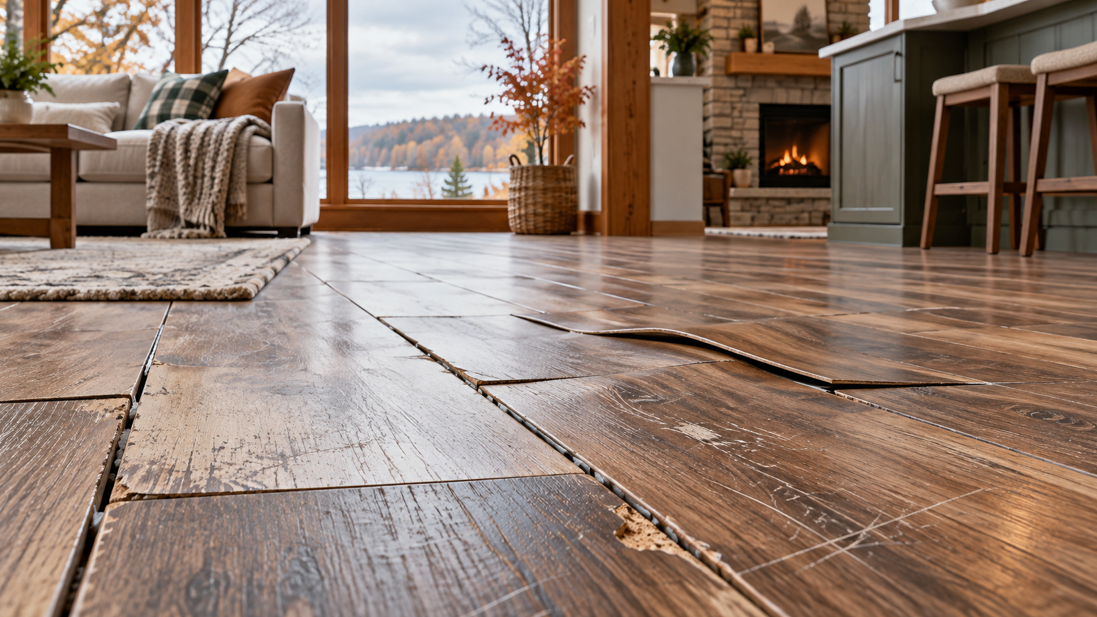
A laminate floor is designed to create a relatively smooth, even surface. If sections begin rising, swelling, or changing shape, take a closer look.
What Does Moisture-Damaged Laminate Look Like?
Possible signs include:
Raised plank edges
Swollen seams
Bubbled or distorted surfaces
Sections that no longer sit flat
Warped boards
Edges that feel higher than neighboring planks
These symptoms don't automatically reveal the cause. Moisture is one possibility, but installation conditions, subfloor issues, and other factors can also affect how flooring sits.
That is why identifying what's happening beneath or around the affected area is important before deciding what to replace.
Wisconsin Winters Can Put Entry Areas to the Test
Snowy Wisconsin winters create a particularly challenging environment around exterior doors.
Boots can bring in:
Melted snow
Slush
Road salt
Grit
Moisture that sits unnoticed near mats or furniture
A little water cleaned up quickly is very different from repeated moisture exposure that reaches plank seams or stays trapped for an extended period.
Kitchens, laundry areas, basements, and rooms near exterior entrances can also experience moisture from leaks, spills, appliances, or seasonal humidity.
When Does Swelling Point Toward Replacement?
A small affected area may sometimes be repairable.
Widespread swelling is different.
If multiple planks have changed shape, damage continues returning, or moisture has affected a larger section of the floor, replacement may be worth considering.
Before putting new flooring down, however, find the source of the moisture. Replacing damaged planks without fixing the reason they became damaged can leave you dealing with the same problem again.
3. Gaps, Loose Planks, and Flooring That Moves Underfoot
Laminate flooring shouldn't feel unstable when you walk across it.
Small seasonal changes can occur with many flooring materials, but repeated movement or noticeable separation deserves attention.
Watch for These Warning Signs
You may notice:
Gaps developing between planks
Boards shifting slightly underfoot
Edges separating from neighboring pieces
Clicking or movement while walking
Uneven transitions
Gaps that return after being corrected
If the issue appears only in one small area, it may have a localized cause.
When movement begins happening throughout a room or several connected spaces, the overall flooring system may need closer assessment.
Why Do Laminate Planks Start Moving?
There isn't one universal explanation.
Possible contributors include:
Expansion and contraction
Moisture exposure
An uneven subfloor
Installation-related issues
Damage to plank locking mechanisms
Long-term everyday wear
Wisconsin's seasonal changes can make movement easier to notice. Homes move from humid summers to heated winter interiors, and indoor conditions can change significantly throughout the year.
That doesn't mean every gap is a major problem. What matters is whether the flooring remains stable or whether movement is becoming more frequent and widespread.
If you're repeatedly fixing gaps only to see them reopen, it may be time to evaluate the floor more broadly instead of treating each gap as a separate issue.
4. Persistent Moisture Damage, Staining, or Musty Odors
Some flooring problems aren't obvious from one quick glance.
A discolored plank may initially look cosmetic, but recurring staining or persistent moisture symptoms can signal that something deserves investigation.
Look Beyond the Visible Mark
Pay attention to:
Darkened edges around planks
Stains that keep returning
Moisture appearing repeatedly in the same area
A persistent musty smell near part of the floor
Damage that reappears after repairs
Several adjacent planks developing similar problems
A musty smell or dark mark doesn't prove there is mold or structural damage. Those issues require proper assessment.
What it does tell you is that simply covering the problem or changing one visible plank may not be enough.
Address the Source First
A practical approach is:
Identify where the moisture is coming from.
Correct the source of the problem.
Determine how far the flooring has been affected.
Decide whether localized repair or broader replacement makes more sense.
Possible sources could include plumbing leaks, appliances, exterior moisture, repeated wet footwear, or moisture beneath the floor.
The important point is that replacement works best when the underlying cause has already been addressed.
Otherwise, even beautiful new flooring can face the same problem later.
5. Damage Has Spread Across Multiple Areas or Rooms
The number of damaged planks matters.
If you have one chipped board in a corner, replacing the entire floor would usually be a very different decision from dealing with multiple damaged areas across an open-plan home.
Signs the Problem Is Becoming Widespread
Take a broader look if you're noticing:
Deep scratching in several rooms
Multiple swollen sections
Gaps appearing in different areas
Repeated repairs over a short period
Numerous damaged plank edges
Noticeable movement in more than one part of the floor
At this stage, the question becomes less about whether each individual defect can be fixed and more about whether continuing to repair the existing floor offers good long-term value.
Matching Older Flooring Can Become Harder
Another practical challenge is finding replacement planks that blend into an existing installation.
The original style may no longer be available. Even if it is, the new plank may look slightly different because the surrounding floor has aged or experienced years of sunlight and wear.
That can be especially noticeable in open spaces where the flooring runs continuously from one room to another.
Homeowners dealing with extensive deterioration can explore modern laminate flooring options that offer attractive wood-inspired styles while being selected around the way the household actually uses the space.
Think About the Entire Floor, Not Just Today's Repair
Before making another repair, consider:
How many areas are currently affected?
Have you already repaired other parts of the floor?
Is the same problem continuing to return?
Can matching replacement planks still be sourced?
Is the rest of the flooring in good condition?
Has the underlying cause of the damage been solved?
Replacing a floor can make more sense when repeated repairs are becoming an ongoing project rather than a one-time fix.
6. Your Flooring No Longer Fits How You Use Your Home
A floor doesn't have to be severely damaged before replacement enters the conversation.
Sometimes a home changes.
A room that once received very little traffic may now be part of the family's everyday routine. Children arrive. Pets join the household. A home office becomes permanent. An open-plan remodel connects spaces that previously used different flooring.
The floor may still function, but it may no longer match the way the household lives.
Think About How Your Needs Have Changed
Replacement may be worth considering if:
A previously quiet room is now heavily used
Pets or children have changed durability priorities
Connected rooms are being remodeled
You want one continuous look throughout a larger space
Maintenance is taking more effort than before
Existing wear no longer suits the appearance of updated rooms
Appearance also matters.
If you're already replacing cabinets, repainting, or renovating several connected spaces, the flooring may become part of the overall design decision.
That doesn't mean flooring needs to be replaced every time styles change. A durable, attractive floor that still performs well can continue serving the home even if it isn't the newest trend.
The better question is whether keeping it still works for your space.
Ask yourself:
Does the floor still feel solid underfoot?
Are damaged areas spreading?
Are repairs becoming more frequent?
Does it still look consistent across the room?
Does it suit the amount of daily traffic it receives?
Would another repair actually solve the problem?
Those questions give you a much clearer picture than judging the floor by age alone.
7. Repair or Replace? A Practical Way to Decide
There isn't a single number of scratches, gaps, or damaged planks that automatically means a laminate floor needs replacement.
Instead, look at the overall condition.
Repair May Be the Better Option When:
Damage is limited to one small area.
Only a few planks are affected.
The rest of the floor remains stable.
Matching material is available.
The underlying cause has already been corrected.
The repair is likely to provide a lasting result.
In these situations, localized work may restore the floor without replacing material that is still performing well.
Replacement May Be Worth Considering When:
Damage extends across a large area.
Several types of deterioration are happening at once.
Moisture-related problems keep returning.
Numerous planks are swelling, separating, or moving.
Replacement pieces no longer blend with the existing floor.
Repairs have become frequent.
The floor no longer meets the household's practical needs.
Think in terms of the next several years rather than the next several weeks.
A repair that keeps an otherwise healthy floor performing well can be excellent value. Repeatedly patching a floor that continues deteriorating is a different situation.
Don't Feel Pressured to Diagnose Everything Yourself
Flooring issues can have several possible causes, and what looks obvious from the surface doesn't always tell the entire story.
An experienced flooring professional can help assess whether damage appears localized, whether broader replacement deserves consideration, and what type of flooring may suit the room if you decide to make a change.
This is particularly useful with moisture or movement issues because finding the underlying cause can be just as important as choosing the replacement material.
Make the Decision Based on the Whole Floor
Laminate flooring rarely reaches the end of its useful life because of one tiny scratch.
More often, the decision develops gradually. Scratches become widespread. Several planks begin moving. Moisture damage keeps returning. Repairs become more frequent, or different areas start showing the same signs of wear.
For Wisconsin homeowners, seasonal moisture and heavy winter traffic can make areas around entrances particularly worth watching, but every home is different.
Look at the extent of the damage, how often problems return, whether the floor remains stable, and whether repairing it still provides lasting value.
Sometimes a targeted repair is all that's needed. In other situations, a fresh floor can provide a more consistent, durable, and attractive foundation for the space.
If you're unsure whether your current laminate can still be repaired or whether replacement is becoming the more practical option, get in touch with the Carpetland USA Flooring Center team for guidance on the next step.


