

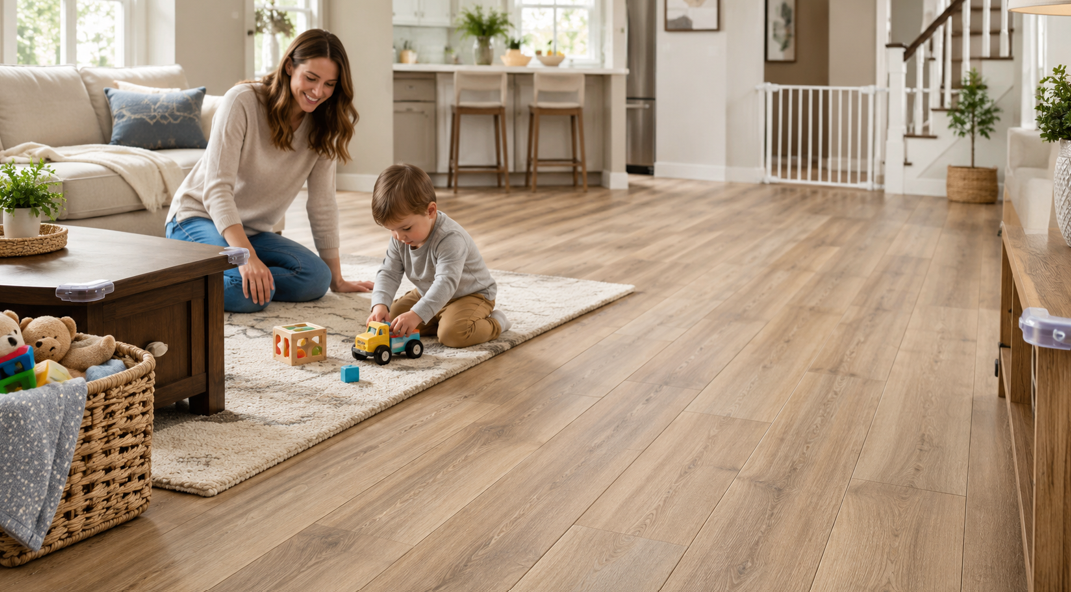
Family Life Can Be Busy, and Your Floors Feel It
In a family home, the floor is part of almost every daily routine. Kids run across it after school. Toys get pushed, dropped, and rolled over it. Snack cups spill. Backpacks land near the door. During Wisconsin winters, snow, salt, and slush can follow everyone inside before you even realize it.
That is why child-proofing laminate floors is less about creating a perfect home and more about making everyday life easier. A few smart habits can help your floors stay beautiful while still giving your family room to relax, play, and enjoy the space.
Laminate is a popular choice for family homes because it offers the warm look of wood with practical performance for daily living. It can work well in living rooms, bedrooms, playrooms, hallways, and open-concept spaces. For families in Germantown, where the seasons bring everything from muddy spring shoes to snowy winter boots, that balance of style and durability matters.
At Carpetland USA Flooring Center, families across Greater SE Wisconsin can find flooring guidance that balances beautiful design with everyday practicality. With the right product, the right care routine, and a few family-friendly floor protection ideas, your laminate floors can support real life without losing their polished look.
Start with the Right Laminate for a Family Home
Child-proofing your laminate floors starts with choosing the right product for your household. Not every family uses its home the same way. A quiet household with older children may need something different from a home with toddlers, pets, sports gear, and constant foot traffic.
For active Germantown families, it helps to look for laminate that fits the pace of everyday life. Scratch resistance is one of the first features parents often think about. Toy cars, small chairs, building blocks, and play tables can all leave marks over time if the flooring surface is not suited for daily activity. A scratch-resistant surface can help reduce visible wear from normal movement.
Water resistance is another helpful feature. Children spill drinks. Pets knock over bowls. Snowy boots leave puddles by the door. While not every laminate product is designed for the same level of moisture exposure, water-resistant options can give families added confidence in areas where small spills and damp shoes are part of the routine.
Surface texture also matters. Highly glossy floors can show marks more easily and may feel slicker underfoot. A laminate with a more natural texture can offer a comfortable feel while also creating a realistic wood-look appearance.
Color plays a role too. Very dark floors can show dust and crumbs quickly, while very light floors may highlight certain marks. Many family homes benefit from mid-tone wood looks, warm oak shades, soft browns, or natural neutral finishes that help everyday wear blend in between cleanings.
Parents planning a family-friendly update can explore durable laminate flooring options designed to bring style, comfort, and everyday practicality into busy homes.
Use Rugs and Mats in High-Activity Areas
Rugs and mats are some of the easiest ways to protect laminate floors from the constant movement of family life. They also make rooms feel warmer, softer, and more comfortable for children who spend plenty of time sitting, crawling, building, reading, or playing on the floor.
In playrooms, a soft area rug or foam play mat can protect the laminate from toy bins, blocks, train tracks, dolls, puzzles, and toy cars. It gives children a defined area for play while helping reduce repeated contact between hard toys and the floor surface.
In living rooms, rugs are useful around sofas, coffee tables, media centers, and other gathering areas. These are the spots where kids often snack, stretch out, watch movies, and play games. A well-placed rug can soften the space and help protect the floor underneath from everyday movement.
Bedrooms can benefit from small rugs near beds, desks, toy storage, or reading corners. Children may drag bins, drop books, or move small chairs around without thinking about the floor. A rug can help reduce direct impact while making the room feel more welcoming.
Entryways need special attention in Wisconsin homes. In Germantown, families deal with snow, rain, salt, mud, and grit across the year. A durable mat near every exterior door can catch moisture and debris before children track it deeper into the home.
Rug pads are also worth using. They help keep rugs in place and add a protective layer between the rug backing and laminate surface. Choose pads designed for hard floors so they support the floor rather than leaving residue or causing unwanted marks.
Create a Shoe, Backpack, and Gear Drop Zone
A family-friendly drop zone can make a big difference in how well laminate floors hold up over time. Most floor wear starts near the entrances, where dirt, grit, moisture, and outdoor debris first enter the home.
For Germantown families, this matters throughout the year. Winter brings snowy boots and salt. Spring brings mud. Summer can bring dusty shoes from outdoor play, sports fields, and backyard activities. Fall often brings wet leaves and extra grit around doorways.
A drop zone does not need to be fancy. It just needs to be easy for the family to use. Set it up near the garage entry, front door, mudroom, or back door. The goal is to give children a clear place to unload before they move through the rest of the home.
Helpful drop zone additions include:
A washable entry mat
A shoe rack or boot tray
Hooks for coats and backpacks
A small bench for removing shoes
Baskets for sports gear
A separate bin for wet gloves, hats, or outdoor toys
This kind of setup helps keep dirt and moisture from spreading across laminate floors. It also makes mornings and after-school routines smoother because everyone knows where shoes, bags, and jackets belong.
A boot tray is especially helpful during Wisconsin winters. It gives wet shoes and boots a place to dry without leaving puddles near flooring seams. For families with younger children, a low shoe rack or labelled basket can make the routine easier to follow.
Add Felt Pads Under Furniture and Kid-Sized Items
Furniture movement is one of the most common causes of everyday marks on laminate floors. In family homes, it is not just the large furniture that matters. Small chairs, stools, play tables, toy shelves, storage bins, and desk chairs can also move across the floor many times a day.
Felt pads are a simple way to protect the flooring surface. They create a soft barrier between furniture legs and the laminate, helping reduce marks from repeated movement.
Use felt pads under:
Dining chairs
Kitchen stools
Play tables
Toy storage units
Small desks
Bedroom furniture
Nursery chairs
Rocking chairs
Benches
Dining rooms and kitchen areas often need the most attention. Children may push chairs back quickly, climb onto stools, or move seats around during meals and homework. Felt pads help these items glide more smoothly and protect the floor during normal family use.
It is also helpful to check felt pads regularly. Over time, they can collect grit, flatten out, or come loose. When that happens, they may stop protecting the floor properly. A quick check every few months can help keep them working well.
For desk chairs or rolling chairs, consider a hard-floor chair mat. This is especially useful in homework areas, bedrooms, or family office spaces where a chair moves back and forth in the same spot every day. Repeated rolling can create visible wear over time, so a mat gives that area extra protection.
Handle Spills Quickly and Calmly
Spills are part of family life. Water bottles leak. Juice cups tip over. Toddlers drop snacks. Craft cups get bumped. Pet bowls splash. The goal is not to prevent every spill. The goal is to respond quickly and keep moisture from sitting on the floor longer than needed.
For laminate floors, a simple spill routine works best. Blot the spill as soon as you notice it. Use a soft, dry cloth or a slightly damp cloth if needed. Pay attention to seams, edges, and areas near walls or cabinets where liquid can settle.
Avoid soaking the floor while cleaning. Laminate floors are designed for regular household use, but standing liquid is not ideal. Even water-resistant laminate benefits from quick care, especially in busy rooms where spills happen often.
Families can make spill care easier by setting up smart protection in common spill zones. Use mats under high chairs, booster seats, snack tables, craft areas, and pet bowls. In playrooms, keep washable cloths nearby so small messes can be handled right away.
Wisconsin weather adds another layer to moisture control. During winter and spring, wet shoes can leave small puddles by entryways. During humid summer days, floors near doors may see more moisture from outdoor traffic. Regularly checking these areas helps keep laminate looking its best.
Children can also learn simple habits over time. Teach them to call an adult when a spill happens, place drinks on stable surfaces, and keep water bottles away from active play areas. Small routines can protect the floor while still keeping the home relaxed and comfortable.
Set Up Kid-Friendly Activity Zones
Children use floors in creative ways. One day the living room becomes a race track. The next day it is a craft station, puzzle area, reading corner, or building zone. Creating clear activity areas can help protect laminate floors while giving kids space to enjoy themselves.
For craft areas, use a washable mat under the table. This is helpful for markers, glue, paint, clay, glitter, and small project supplies. It also makes cleanup easier because most of the mess stays in one place. Storage bins or rolling carts can keep craft supplies off the floor and reduce dropped items.
Snack areas can also benefit from floor protection. If younger children eat at a small table, high chair, or booster seat, place a mat underneath. This helps catch crumbs, dropped utensils, and small spills before they spread across the room.
Homework areas need a slightly different setup. Desks and chairs often move in the same spot every day. Felt pads, chair mats, and organized storage can help protect the floor from repeated chair movement and dropped school supplies. A small basket for books, chargers, and pencils can also reduce clutter on the floor.
Play zones are especially helpful in open-concept homes. A rug can show children where building, toy cars, or pretend play belong. This does not mean play has to stay perfectly contained. It simply gives the busiest activities a softer surface and helps protect the laminate underneath.
Keep Toys from Leaving Marks
Toys are part of a happy family home, but some toys can be rough on flooring when used directly on the surface. Toy cars, blocks, plastic bins, ride-on toys, and heavy playsets can all create marks if they are dragged, pushed hard, or used with grit underneath.
Start by checking toys with wheels. If a toy wheel has a rough edge, trapped pebble, or damaged part, it may scratch the floor as it moves. This is especially important for toys that go outside and then come back indoors. Small stones and grit can stick to wheels, bottoms, or storage bins.
Use play mats for toys that involve repeated movement. Train sets, cars, blocks, and building toys are easier on floors when children use them on a rug or mat. This also gives kids a defined play space and makes cleanup faster.
Storage habits matter too. Heavy toy bins can leave marks if children drag them across the floor. Choose bins with smooth bottoms, keep heavier storage in one place, or teach children to carry smaller containers instead of sliding them. If a storage unit moves often, add felt pads to the bottom.
Outdoor toys are best kept outside or in the garage. Scooters, sports equipment, and backyard toys can bring in grit that may mark the floor. A simple basket or shelf near the entrance can help keep outdoor play items separate from indoor toys.
The goal is not to limit play. It is to guide the busiest activities toward floor-friendly habits. Kids can still enjoy the home fully while parents protect the surfaces that make the space feel finished and beautiful.
Build a Simple Cleaning Routine That Works
A good cleaning routine does not need to take over your week. For family homes, the most helpful routine is simple, steady, and easy to repeat.
Daily or as-needed cleaning starts with removing dirt, crumbs, and grit. Use a soft broom, dust mop, or vacuum with a hard-floor setting. Grit can act like sandpaper when it gets walked across the floor, so regular dry cleaning is one of the best ways to protect the surface.
Weekly cleaning can include a laminate-appropriate cleaner and a lightly damp mop. The mop needs to be damp, not wet. Too much water can leave moisture behind, especially near seams and edges. Work in manageable sections and avoid letting liquid pool on the floor.
Entryways may need more attention during winter and spring. Snow, salt, slush, and mud can collect around doors, mats, and boot trays. Shake out mats regularly, wipe up puddles quickly, and sweep gritty areas before debris travels into living spaces.
There are also a few products and habits to avoid. Abrasive scrubbers can dull or mark the surface. Very wet mopping is not a good fit for laminate. Wax products not made for laminate can leave buildup. Harsh cleaners may affect the finish or make floors look cloudy.
A family cleaning basket can make the routine easier. Keep soft cloths, a laminate-safe cleaner, and a dust mop nearby. When cleanup tools are easy to reach, small messes are more likely to be handled before they become bigger concerns.
Prepare for Wisconsin’s Indoor Play Seasons
In Germantown, kids spend plenty of time indoors during long winters, rainy weekends, and very hot summer afternoons. That means more running, sliding, building, snacking, and playing inside the home.
Preparing for indoor play seasons can help laminate floors stay in better shape. Start with a soft play area in the room your family uses most. A rug, foam mat, or washable play mat gives children a comfortable place to move around while protecting the flooring below.
Keep active play away from furniture with sharp corners or heavy pieces that can shift. Use baskets to clear toys from walkways at the end of the day. This reduces tripping concerns and keeps toys from being stepped on or dragged across the floor.
Rotating play zones can also help. If the same corner of the room handles every activity, that area may show wear faster. Switching where certain activities happen can help spread out daily use.
During snowy months, keep entry mats clean and dry. A saturated mat can stop doing its job and allow moisture to reach the floor. Having a second washable mat ready during winter can be useful for busy households.
Laminate flooring fits family spaces well because it supports a stylish look while still working with the rhythm of everyday life. With a few seasonal habits, families can enjoy indoor play without constantly worrying about the floor.
Know When Professional Guidance Helps
Some floor protection questions are easy to handle at home. Others are easier to answer with help from flooring professionals, especially when families are choosing new floors or trying to solve a recurring issue.
Professional guidance can help when comparing water-resistant laminate options, choosing finishes for homes with kids and pets, selecting colors that hide everyday marks, or planning floors for high-traffic entryways. It can also help when deciding whether a damaged plank can be replaced or whether a larger flooring update makes more sense.
For families with open-concept homes, layout guidance is especially useful. The same laminate floor may run through living rooms, dining areas, hallways, and kitchens, so color, plank direction, and transitions need to work together. A knowledgeable team can help homeowners compare samples and imagine how the floor will look in real lighting.
Showroom visits are also valuable for parents. Samples give you a better sense of texture, color, and finish than photos alone. You can compare options side by side and think about how each one fits your household’s daily routine.
Carpetland USA Flooring Center has served Southeastern Wisconsin and Northeastern Illinois for more than 25 years, offering quality products, dependable craftsmanship, and helpful service for residential and commercial customers. For Germantown families, that local experience can make flooring decisions feel more guided and confident.
Make Laminate Floors Work for Real Family Life
Child-proofing laminate floors is not about changing the way your family lives. It is about creating smart routines that protect your home while keeping it comfortable, welcoming, and easy to enjoy.
Start with a family-friendly laminate product. Add rugs and mats where kids play most. Create an entryway drop zone for shoes, backpacks, and outdoor gear. Use felt pads under furniture and chair mats in homework spaces. Handle spills quickly, keep toys on soft play surfaces when possible, and follow a simple cleaning routine that fits your schedule.
These small steps work together. They help reduce scratches, manage moisture, control dirt, and keep busy family spaces feeling polished. They also give children room to be children, which is exactly what a family home is for.
For Germantown households, seasonal habits matter too. Snowy boots, spring mud, summer dust, and indoor winter play all affect how floors wear over time. With the right protection in place, laminate can remain a stylish and practical choice through every season.
If you’re planning a family-friendly flooring update in Germantown or nearby communities, reach out to us for helpful guidance from the Carpetland USA Flooring Center team.


