

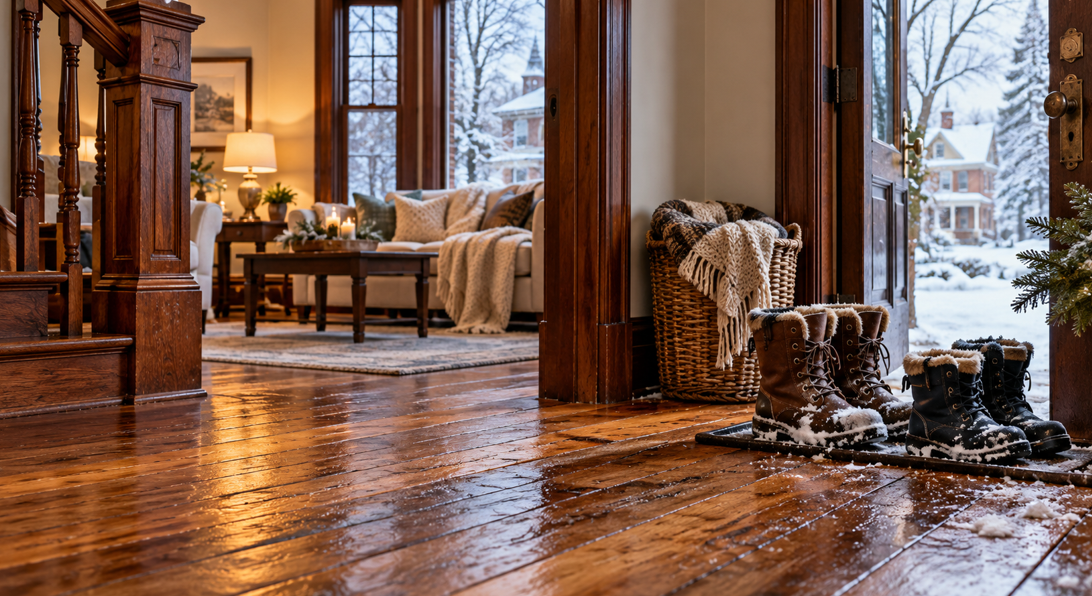
Older homes have a special charm. Original trim, character-filled rooms, and solid wood floors that have carried generations of family life. In Germantown and Kenosha, many of these homes also face long, cold winters that test even the toughest hardwood.
The good news is that a few smart habits protect your floors all season. At Carpetland USA Flooring Center, our knowledgeable team has served Southeastern Wisconsin for over 25 years, and we have seen how simple winter care keeps hardwood beautiful for decades. Here is a practical guide for homeowners who love their older homes.
Why Winter Is Tough on Hardwood in Older Homes
Wood is a natural material that responds to its surroundings. In winter, several factors combine.
Dry indoor air: Furnaces pull moisture from the air, and wood releases moisture as a result.
Drafts and cold spots: Older windows, doors, and foundations can let in cold air near the floor.
Snow, salt, and grit: Boots carry meltwater and de-icing salt straight onto wood surfaces.
Aging finishes: Floors that have not been refinished in years have less protection against wear.
Together, these conditions can lead to gaps between boards, surface scratches, and dull, worn spots.
Common Winter Issues to Watch For
Gaps Between Boards
As wood loses moisture, boards shrink slightly and small gaps appear. This is normal to a point, and gaps often close again as humidity returns in spring. Larger gaps are a sign that indoor air is very dry.
Cupping and Crowning
When moisture levels differ between the top and bottom of a board, edges may rise (cupping) or the center may lift (crowning). Damp basements below and dry heated air above can contribute to this in older homes.
Salt and Water Marks
Road salt leaves white residue, and melting snow can sit on the finish. Over time, this can wear the protective layer and mark the wood.
Scratches From Grit
Sand and small stones tracked in from icy sidewalks act like sandpaper underfoot.
Practical Ways to Protect Your Hardwood This Winter
Keep Humidity Balanced
A whole-home or room humidifier is one of the best investments for older homes with wood floors. Many flooring manufacturers recommend keeping indoor relative humidity within a moderate range. A simple hygrometer helps you track levels day to day.
Create a Strong Entry Zone
Place a durable mat outside each exterior door.
Add an absorbent mat or boot tray inside.
Encourage a shoes-off routine during snowy months.
These steps catch most of the salt and slush before it reaches your floors.
Clean Gently and Often
Sweep or use a soft-bristle vacuum attachment several times a week in winter. Wipe up wet spots right away with a soft, dry cloth. Avoid steam mops and soaking wet mops, which push moisture into seams.
Protect High-Traffic Paths
Area rugs and runners in hallways and near doors reduce wear. Choose rugs with breathable, floor-safe backing so moisture does not get trapped.
Seal Drafts
Weatherstripping doors and windows helps your whole home stay comfortable and reduces cold spots that affect the wood near exterior walls.
Germantown and Kenosha: Local Considerations
Germantown homes, especially those with crawl spaces or older basements, can see a big difference between lower-level moisture and dry upper floors. Keeping basements dry with a dehumidifier in other seasons and balanced humidity in winter supports the floors above.
Kenosha homes near Lake Michigan often experience damp shoulder seasons and sharp temperature drops when winter arrives. That quick change is when hardwood tends to move the most, so early humidifier use in late fall is a smart move.
When Refinishing or Replacing Makes Sense
Sometimes winter reveals that an older floor needs more than routine care.
Refinishing: If the finish is worn through in traffic lanes but boards are solid, a professional refinish restores protection and shine.
Board repair: Damaged or water-stained boards can often be replaced individually.
New hardwood: If floors have been sanded many times or show widespread damage, new hardwood flooring brings fresh beauty while keeping the classic character older homes deserve.
Choosing New Hardwood for an Older Home
When replacing floors, consider species and widths that complement the home's era. Traditional oak in a classic width suits many older Wisconsin homes, while engineered hardwood offers extra stability in rooms with changing humidity. Our team can help you compare options in person.
Questions to Ask Before You Decide
Not sure which path is right? Ask yourself how many times the floor has been sanded, whether boards feel loose or springy, and how the room is used today. Our professional staff can look at photos or visit your home to offer expert advice.
A Simple Winter Checklist
Use this list to keep your hardwood looking its best from November through March.
Check humidity weekly with a hygrometer.
Run a humidifier when levels drop.
Keep mats at every entry and shake them out often.
Sweep or vacuum grit several times a week.
Wipe up snowmelt promptly.
Use felt pads under chairs and tables.
Watch for new gaps or raised edges and note when they appear.
Trust Local Experts With Your Floors
Older homes deserve care from people who understand them. Carpetland USA Flooring Center is a 100% employee-owned company, fully licensed and insured, with free estimates and residential installation. Visit our Germantown showroom at W188 N9875 Maple Road or our Kenosha showroom at 5407 Green Bay Road to see options for older homes.
Keep Your Hardwood Beautiful All Winter
With balanced humidity, a strong entry zone, and gentle cleaning, your older home's hardwood can handle Wisconsin winters with ease. And when it is time for a refresh, our dedicated team is ready to help.
Have questions about winter care or new floors? Reach out to us today, or call Germantown at (262) 216-6748 or Kenosha at (262) 371-9259 to schedule your free estimate.


