

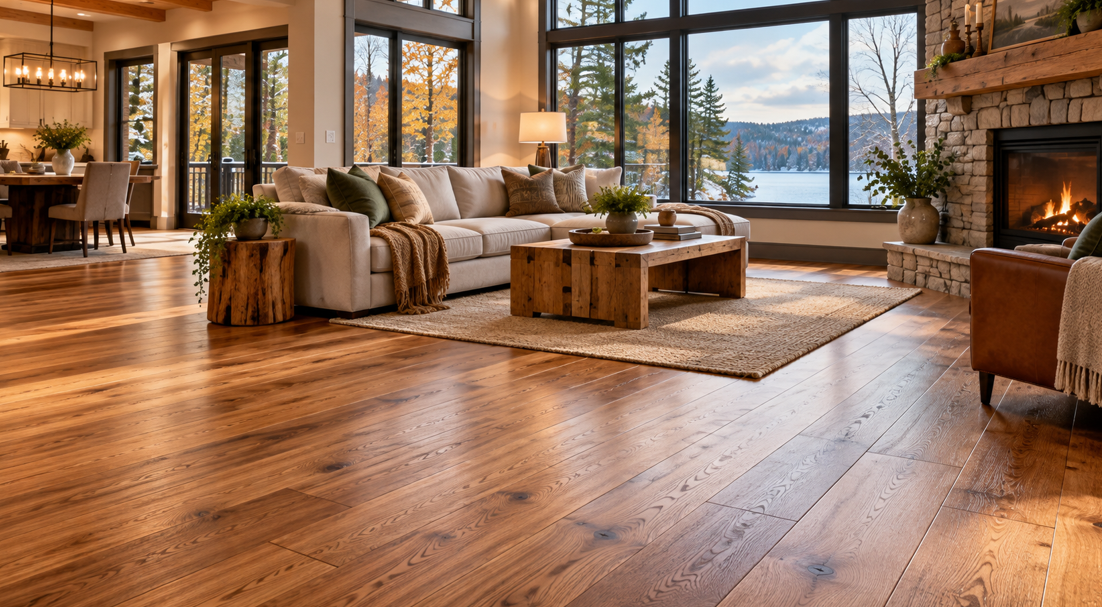
Hardwood flooring brings warmth, character, and lasting style to a home, but Wisconsin’s changing seasons can place real demands on natural wood. Hot, humid summers can cause wood to absorb moisture and expand, while heated winter interiors often create much drier conditions that encourage contraction.
That seasonal movement is normal to a degree. The goal is not to find hardwood that never reacts to humidity. Instead, homeowners can choose flooring types, species, construction methods, and finishes that handle those changes more predictably.
For more than 25 years, Carpetland USA Flooring Center has helped homeowners throughout Southeastern Wisconsin choose flooring that suits local homes and changing seasonal conditions. From Germantown and Burlington to Kenosha, Racine, Pewaukee, West Allis, and nearby communities, understanding how humidity affects hardwood can make the flooring selection process much easier.
Wisconsin homeowners have several strong options. Engineered hardwood can be particularly useful in areas where humidity changes are a concern, while certain solid hardwood species also offer excellent dimensional stability when correctly selected and installed.
Why Wisconsin Humidity Matters for Hardwood Flooring
Wood naturally responds to the amount of moisture in the surrounding air.
When indoor humidity rises, hardwood can absorb some of that moisture and expand. When the air becomes dry, the wood releases moisture and contracts.
Wisconsin provides plenty of opportunities for both conditions.
Summer Humidity
Warm summers can increase indoor moisture levels, particularly in homes without consistent air conditioning or dehumidification.
Higher humidity may contribute to:
Planks expanding slightly
Tighter seams
Edges lifting in more extreme conditions
Changes in how the floor feels underfoot
Dry Winter Air
Winter creates the opposite challenge.
Heating systems can significantly reduce indoor humidity while temperatures outside remain cold. As hardwood dries, homeowners may notice small gaps developing between planks.
Minor seasonal gaps are often part of normal hardwood movement and may close again once humidity rises.
The Goal Is Stability, Not Zero Movement
No genuine wood floor is completely unaffected by environmental changes.
A well-performing hardwood floor is one that moves within expected limits without developing widespread gaps, cupping, cracking, or other persistent changes.
Flooring selection, installation, indoor humidity management, and the condition of the subfloor all contribute to long-term performance.
Engineered Hardwood Is a Strong Choice for Changing Humidity
For Wisconsin homeowners who want the appearance of real wood with added dimensional stability, engineered hardwood is often worth considering.
Unlike solid hardwood, which is milled from one piece of wood, engineered hardwood is constructed from multiple layers.
A real hardwood veneer forms the visible surface, while the layers beneath are arranged to improve stability.
Why the Layered Construction Helps
The cross-layered structure can reduce the amount of expansion and contraction caused by humidity changes.
This makes engineered hardwood particularly attractive for homes where indoor conditions vary significantly between summer and winter.
Potential advantages include:
Greater dimensional stability
Real hardwood appearance
Compatibility with a wider range of rooms
Multiple species and finish options
Attractive wide-plank designs
Useful for More Than One Type of Room
Engineered hardwood may work well in:
Living rooms
Bedrooms
Dining rooms
Open-concept spaces
Home offices
Certain lower-level areas when conditions are appropriate
The exact product still matters. Not every engineered floor has the same construction, wear layer, or installation requirements.
Homeowners can compare product specifications and room conditions instead of assuming that all engineered hardwood will perform identically.
White Oak Is One of the Most Versatile Choices
White oak has become one of the most popular hardwood flooring species, and its appeal goes beyond appearance.
It offers a balanced combination of durability, dimensional stability, and design versatility.
Why White Oak Works Well in Wisconsin Homes
White oak tends to handle normal environmental changes relatively well when it is properly installed and indoor humidity is managed.
It also offers a grain pattern that works with a wide variety of interiors.
White oak can complement:
Modern homes
Transitional interiors
Farmhouse-inspired spaces
Traditional designs
Minimalist rooms
Homeowners can choose from natural finishes, lighter tones, warm browns, and deeper stains.
A Practical Option for Busy Homes
White oak is also reasonably hard, making it suitable for households with regular foot traffic.
That combination of strength and stability makes it appealing for living rooms, hallways, dining spaces, and open floor plans.
For Wisconsin homeowners who want one hardwood species that balances performance and style, white oak is often a strong starting point.
Red Oak Remains a Reliable Wisconsin Favorite
Red oak has been used in American homes for generations and remains widely available.
Its visible grain and warm appearance make it especially suitable for traditional and transitional interiors.
How Red Oak Handles Seasonal Changes
Like any solid hardwood, red oak will expand and contract as indoor humidity changes.
However, proper acclimation, installation, and humidity control can help it perform reliably.
Red oak works particularly well when homeowners want:
A classic hardwood look
Noticeable grain variation
Warm natural tones
A wide selection of stains
Easy coordination with existing woodwork
Because red oak is so widely used, it can also be a practical choice when matching existing hardwood in older homes.
Consider the Width of the Plank
Plank width can influence seasonal movement.
Wider solid hardwood planks can show changes more noticeably than narrower boards because there is more wood across each individual plank.
Homeowners who love the wide-plank look may want to explore engineered construction as another way to achieve that style while improving dimensional stability.
Maple Offers Durability With a Cleaner Look
Maple hardwood has a finer, smoother grain than oak, giving it a clean and contemporary appearance.
It is also relatively hard, making it appealing for active homes.
Where Maple Works Well
Maple can suit:
Contemporary living areas
Bedrooms
Home offices
Minimalist interiors
Light and airy spaces
Its lighter natural appearance can help rooms feel open and bright.
Humidity Still Matters
Maple can perform beautifully, but it deserves consistent indoor conditions.
Because its grain is less pronounced than oak, changes in the surface may sometimes be more noticeable.
Careful acclimation before installation and steady indoor humidity can help support long-term performance.
Homeowners considering maple can discuss room conditions and installation details before making a final decision.
Hickory Delivers Strength and Distinctive Character
Hickory is one of the harder domestic hardwood species commonly used for flooring.
It has dramatic grain movement and natural color variation, making it ideal for homeowners who want a floor with personality.
Why Homeowners Choose Hickory
Hickory offers:
Excellent surface hardness
Distinctive natural variation
Rustic or character-rich appearance
Strong visual impact
Good performance in high-traffic living areas
Its appearance can work particularly well in larger rooms where the natural variation has space to stand out.
Consider Seasonal Movement
Although hickory is very hard, hardness and dimensional stability are not the same thing.
Hardness describes resistance to dents and surface wear. It does not mean the wood will ignore humidity changes.
For homes that experience noticeable seasonal humidity variation, engineered hickory may provide the look homeowners want with additional dimensional stability.
Engineered Construction Can Expand the Hardwood Options Available
Choosing the right wood species is important, but construction can be equally significant.
Wisconsin homeowners do not necessarily need to choose between beauty and stability.
Modern hardwood flooring collections can include engineered versions of oak, maple, hickory, and other species, providing more flexibility when matching a floor to the conditions of a particular home.
Engineered Hardwood May Be Especially Useful When:
Indoor humidity changes noticeably between seasons
Wide planks are preferred
Flooring is being considered for a lower level
The homeowner wants additional dimensional stability
The installation method calls for a specific type of construction
Solid hardwood can still perform beautifully in Wisconsin homes. The best choice depends on the environment, subfloor, installation location, and homeowner preferences.
Rather than selecting flooring based only on appearance, consider how the product is constructed and where it will be installed.
Plank Width Can Influence Seasonal Performance
Wide-plank hardwood continues to be popular because it creates an open, refined appearance with fewer visible seams.
However, plank width can affect how seasonal movement appears.
Narrower Planks
Narrow solid hardwood boards distribute movement across a larger number of seams.
If the wood contracts slightly during a dry winter, the individual gaps may appear smaller.
Wider Planks
A wide board contains more material across its width.
That means expansion or contraction can sometimes be more noticeable.
This does not mean wide-plank hardwood is unsuitable for Wisconsin.
Engineered construction can provide an excellent way to achieve the wide-plank look while reducing some of the dimensional movement associated with wide solid boards.
The combination of species, construction, plank width, and indoor conditions matters more than any one factor by itself.
Acclimation Helps Hardwood Adjust Before Installation
Even a well-chosen hardwood product benefits from proper preparation.
Acclimation allows the flooring material to adjust to the environmental conditions of the home before installation.
Why Acclimation Matters
Wood that moves directly from a different storage environment into a home may have a different moisture level than the surrounding interior.
Installing it before conditions are appropriate can contribute to unexpected movement later.
Depending on the flooring product and manufacturer instructions, preparation can involve monitoring:
Indoor temperature
Relative humidity
Wood moisture content
Subfloor moisture conditions
The exact acclimation process varies by product.
Engineered and solid hardwood can have different requirements, which is why following manufacturer guidance is important.
A professional installation team can evaluate both the flooring and the environment rather than relying on a fixed number of acclimation days for every project.
Maintaining Consistent Indoor Humidity Can Protect Hardwood
Choosing the right hardwood is only part of the equation.
Indoor climate management can help flooring perform more consistently throughout Wisconsin’s seasonal changes.
Use Air Conditioning During Humid Weather
Air conditioning can help manage both temperature and moisture during summer.
Homes that remain very humid for extended periods may benefit from additional dehumidification.
Add Humidity During Very Dry Winters
Heating systems can dry indoor air significantly.
A humidifier may help maintain more consistent conditions during winter, particularly when indoor air becomes extremely dry.
Monitor Humidity Instead of Guessing
A simple indoor hygrometer can show relative humidity levels.
This gives homeowners useful information about how much the indoor environment changes between seasons.
Flooring manufacturers may provide specific humidity recommendations for their products, so those specifications can guide household climate management.
Respond to Moisture Promptly
Spills, melting snow, and wet footwear are part of everyday Wisconsin life.
Cleaning up moisture promptly can help protect hardwood.
Entry mats near exterior doors can also reduce the amount of snow, salt, grit, and water that reaches the floor.
Watch for Signs That Humidity Is Affecting the Floor
Some seasonal movement can be normal, but homeowners can keep an eye on changes that persist or become widespread.
Common Signs Include:
Large gaps between multiple boards
Edges that remain raised
Boards developing a curved appearance
Persistent changes in plank shape
Flooring lifting in certain areas
Cracks developing in multiple boards
One small seasonal gap is very different from widespread changes across an entire room.
If a floor changes significantly, the first step is often to look at indoor humidity, possible moisture sources, and environmental conditions.
This can help determine whether the issue relates to normal seasonal movement or something that deserves closer assessment.
Choosing Hardwood for Different Wisconsin Homes
The right hardwood choice can also depend on the type of home and how each room is used.
Busy Family Homes
White oak and engineered hardwood can offer a useful combination of durability, attractive design, and stability.
These options can work well in active living rooms, dining spaces, and hallways.
Homes With Wide Seasonal Humidity Changes
Engineered hardwood deserves particular consideration when indoor conditions vary significantly.
Its layered construction can provide additional dimensional stability while maintaining the beauty of genuine wood.
Traditional Homes
Red oak can complement existing woodwork and traditional interiors beautifully.
Its widespread use can also make it easier to coordinate with hardwood already installed elsewhere in the home.
Modern Homes
White oak and maple can create cleaner, lighter interiors.
Wide engineered planks can help produce a contemporary appearance without giving up the natural character of hardwood.
Character-Rich Interiors
Hickory can bring strong grain patterns and natural color variation into rustic, transitional, or highly personalized spaces.
The best option is the one that balances visual preferences with the actual conditions inside the home.
Find Hardwood That Fits Wisconsin Living
Wisconsin’s humidity swings do not mean homeowners have to avoid hardwood flooring.
The key is choosing the right combination of wood species, construction, plank width, installation approach, and indoor climate management.
White oak offers a versatile balance of stability and durability. Red oak remains a dependable classic. Maple provides a clean appearance and strong surface performance, while hickory brings durability and distinctive character. Engineered hardwood can make many of these species even more adaptable to changing seasonal conditions.
Just as importantly, maintaining reasonably consistent indoor humidity can help hardwood perform beautifully for years.
A knowledgeable flooring professional can help compare options based on the room, subfloor, household lifestyle, and desired design instead of selecting a floor based on appearance alone.
Carpetland USA Flooring Center offers a wide selection of hardwood styles for homeowners throughout Southeastern Wisconsin. To compare species, construction types, finishes, and flooring suited to a particular home, reach out to us for personalized guidance.


