

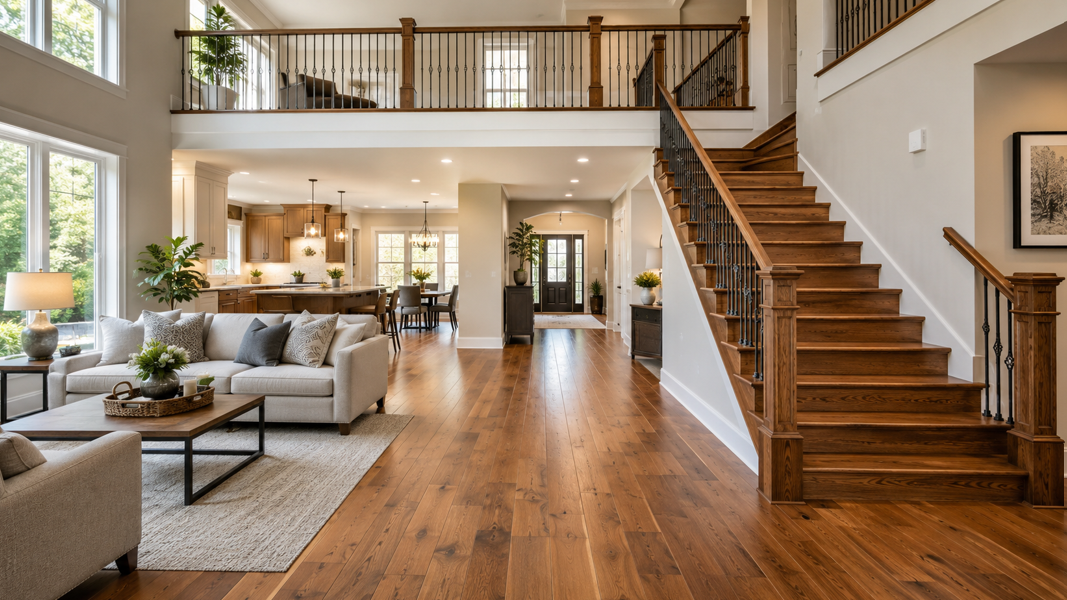
Why Hardwood Flooring Needs Extra Planning in Multi-Story Homes
Multi-story homes give families room to spread out. There may be bedrooms upstairs, a home office on the second floor, a main-level living room, a finished lower level, and stairways connecting everything together. In West Allis and Germantown, this kind of layout is common for families who want more usable space without giving up comfort or style.
But when you’re choosing flooring for a multi-story home, the decision is not only about how the floor looks. It also comes down to how it feels underfoot, how much sound travels between levels, how the floor handles daily traffic, and how well it fits Wisconsin’s seasonal changes.
That is why hardwood flooring needs thoughtful planning in homes with more than one level. Hardwood brings warmth, character, and long-lasting beauty, but upper floors, stairs, and hallways can create different needs than main-level rooms. Footsteps may sound louder from below. Furniture movement can carry through the structure. Seasonal humidity changes can affect how wood responds over time.
At Carpetland USA Flooring Center, homeowners across Greater SE Wisconsin can explore flooring options with help from a knowledgeable local team that understands both design and everyday performance. For multi-story homes, that guidance can make the difference between a floor that only looks good and one that works well across the entire home.
What Makes Multi-Story Homes Different for Hardwood?
A single-level home and a multi-story home do not always need the same flooring plan. In a two-story or split-level home, each floor often serves a different purpose. The main level may handle guests, pets, meals, and regular family traffic. Upstairs may include bedrooms, hallways, nurseries, playrooms, or home offices.
The biggest difference is sound movement. When someone walks across an upstairs floor, that sound can travel through the floor structure into the rooms below. This can be more noticeable when an upper hallway sits above a living room, a bedroom sits above a kitchen, or a playroom sits above a quieter space.
Hardwood is a firm flooring surface, which means it naturally creates more footstep sound than softer materials. That does not mean hardwood is a poor choice for multi-story homes. It simply means homeowners need to think about sound control, installation method, underlayment, rugs, and room use before making a final choice.
Traffic patterns are another factor. Stairs, landings, and upper hallways often see repeated movement throughout the day. Kids move from room to room. Laundry baskets go up and down the stairs. Pets follow the family around. These high-use areas need flooring that feels durable, stable, and easy to maintain.
Wisconsin weather also matters. Homes in West Allis and Germantown deal with cold winters, dry indoor heating, spring moisture, and humid summer days. Hardwood responds to indoor moisture levels, so product selection and installation planning are important for long-term performance.
Why Hardwood Works Well in Multi-Level Wisconsin Homes
Hardwood has a timeless quality that works beautifully in multi-story homes. It can make the main level feel polished, bring warmth to bedrooms, and help stairs and hallways feel connected instead of separate. When chosen well, hardwood creates a smooth visual flow from one level of the home to another.
One of the strongest benefits of hardwood is its lasting appeal. It works with many home styles, from older West Allis homes with classic trim to Germantown homes with open-concept layouts and updated interiors. Hardwood pairs well with painted cabinetry, natural woodwork, area rugs, neutral walls, and both traditional and modern furniture.
Hardwood also gives homeowners plenty of design flexibility. Lighter wood tones can make upstairs bedrooms feel brighter and more open. Medium brown tones can add warmth to family rooms and hallways. Richer finishes can create a more formal look in dining rooms, home offices, or main-level gathering spaces.
For multi-story layouts, consistency is another advantage. Using hardwood across the main floor, stairs, and upper hallways can make the whole home feel more cohesive. That does not mean every room has to look identical. Rugs, furniture, bedding, wall color, and lighting can still give each space its own personality.
Homeowners exploring hardwood flooring can compare species, plank widths, colors, finishes, and construction options that fit both the look of the home and the way the household lives every day.
Sound Control Starts with the Right Flooring Plan
Sound is one of the main concerns homeowners have when choosing hardwood for upper floors. Footsteps, pet nails, moving chairs, dropped toys, and hallway traffic can all sound more noticeable when they happen above another room.
The good news is that sound can be managed with the right flooring plan. The goal is not to make the home completely silent. The goal is to create a more comfortable space where everyday movement does not feel too disruptive.
There are two main sound concerns in multi-story homes. The first is impact sound. This is the noise caused by direct contact with the floor, such as walking, running, dropping an item, or moving furniture. The second is airborne sound, such as voices, music, or television noise traveling between rooms.
Hardwood mainly affects impact sound because it is a solid surface. In upper-level spaces, impact sound can travel through the floor structure. That is why product choice, subfloor condition, installation method, and underlayment all matter.
Area rugs can also help. A rug in an upstairs bedroom, hallway, or playroom can soften footsteps and make the room feel warmer. Rug pads add another layer of comfort and help keep rugs in place.
If sound control is a major priority, it is worth discussing the full flooring system before installation begins. The hardwood itself matters, but so does what sits underneath it. A thoughtful plan can make the finished floor feel more comfortable for everyone in the home.
Engineered vs. Solid Hardwood for Upper Levels
When choosing hardwood for a multi-story home, homeowners often compare solid hardwood and engineered hardwood. Both can be beautiful. Both can add value, warmth, and character. The better choice depends on the home, the subfloor, the room, and the household’s priorities.
Solid hardwood is made from one piece of wood. It has a traditional feel and can often be refinished multiple times over its lifespan, depending on the product and condition. Many homeowners love solid hardwood for main living areas because of its classic look and long-term appeal.
Engineered hardwood has a real hardwood surface over a layered core. This structure can help with stability, especially in homes where seasonal moisture and temperature changes are a concern. For upper levels, engineered hardwood may be a practical option because it can work well in a wider range of installation situations.
In West Allis and Germantown, homes can vary a lot. Some have older subfloors, some have additions, and some have newer open layouts. Because of that, there is no single answer that fits every home.
For upstairs bedrooms and hallways, engineered hardwood may offer useful advantages. It provides the beauty of real wood while supporting dimensional stability through Wisconsin’s seasonal shifts. For main floors, either solid or engineered hardwood may work well depending on the homeowner’s goals.
The best approach is to compare samples in person and talk through installation conditions before deciding. A floor needs to look right, but it also needs to suit the structure and daily rhythm of the home.
Best Places to Use Hardwood in a Multi-Story Home
Hardwood can work beautifully in many parts of a multi-story home, but each space has its own needs. Choosing the right areas for hardwood helps homeowners get the best balance of style, comfort, and everyday performance.
Main Living Areas
Main living rooms, family rooms, and dining areas are some of the most popular places for hardwood. These spaces are highly visible, so hardwood can make a strong design impact. It also works well with area rugs, which can define seating areas and add softness.
For busy family spaces, a durable finish is important. Main-level rooms often handle guests, pets, shoes, furniture movement, and daily traffic. Medium-tone hardwood can be a practical choice because it adds warmth while helping everyday dust and minor marks appear less noticeable between cleanings.
Stairways and Landings
Stairs connect the levels of a home, so they play a major role in how the flooring design flows. Hardwood stairs can create a polished, seamless look when paired with hardwood on the main level or upper hallway.
Stairs also need careful planning. Finish, tread style, nosing, and surface feel all matter. Some homeowners add stair runners to soften sound, add comfort, and bring color or pattern into the space. A runner can also help protect the hardwood in one of the busiest areas of the home.
Upper Hallways
Upper hallways get more traffic than many people expect. They connect bedrooms, bathrooms, closets, and laundry areas. Because footsteps in upper hallways can be heard below, sound planning matters here.
Hardwood in an upper hallway can look elegant and help connect the upstairs design. Rugs or runners can soften the space and reduce footstep sound. Durable finishes and regular cleaning also help protect these high-use paths.
Bedrooms and Home Offices
Bedrooms and home offices can be excellent spaces for hardwood. In bedrooms, hardwood creates a clean, warm foundation that pairs well with area rugs near beds, chairs, or reading corners. In home offices, hardwood gives the room a professional and finished look.
For upstairs bedrooms, rugs are often useful for comfort and sound softening. In offices, chair mats can help protect the floor from repeated rolling chair movement.
Choosing Hardwood Finishes for Busy Upper Floors
Finish choice matters in a multi-story home because upper levels often see repeated movement from family members, pets, and furniture. The right finish can help hardwood maintain its beauty while fitting the way the household lives.
Matte and satin finishes are popular because they offer a softer, more natural look. They also tend to be more forgiving than very glossy finishes when it comes to showing dust, footprints, and everyday marks. For family homes, that can be a helpful advantage.
Color also affects how floors look between cleanings. Very dark hardwood can create a dramatic effect, but it may show dust, pet hair, and light scratches more easily. Very light floors can brighten a space, but some marks may still stand out depending on the finish. Mid-tone woods often give busy households a balanced option.
Texture can also help. Wire-brushed or lightly textured hardwood can add character while softening the appearance of minor daily wear. Smooth finishes can look polished and refined, but they may reveal more surface marks in high-traffic areas.
For multi-story homes, it helps to think about how each level is used. A formal main level may call for one look, while upper bedrooms and hallways may benefit from a more forgiving finish. The goal is to choose hardwood that feels beautiful, livable, and suited to the home’s real routine.
How Wisconsin Seasons Affect Hardwood Floors
Wisconsin weather plays a real role in hardwood flooring performance. Homes in West Allis, Germantown, and nearby communities experience cold winters, humid summers, wet springs, and dry indoor air during heating season.
Hardwood naturally responds to changes in moisture and temperature. During humid months, wood can expand slightly. During dry winter months, it can contract. This movement is normal, but it is one reason product selection, acclimation, and installation planning matter.
Multi-story homes can have different indoor conditions from one level to another. Upper floors may feel warmer or drier during winter. Lower levels may have different humidity levels. Main living areas may see more exterior door traffic, while upstairs spaces may be more affected by heated indoor air.
Homeowners can support hardwood performance by keeping indoor humidity reasonably consistent, using entry mats to reduce moisture, and cleaning up water quickly. Humidifiers may help during dry winter months, while air conditioning or dehumidification can support comfort during humid summers.
Seasonal care does not need to take over your routine. It is about creating a stable indoor environment and using practical habits. For Wisconsin homeowners, that steady care helps hardwood look better and perform more consistently throughout the year.
Underlayment, Subfloors, and Installation Details Matter
The beauty of hardwood is what homeowners see first, but what sits underneath the floor matters just as much. In multi-story homes, the subfloor and installation method can affect sound, comfort, and long-term performance.
The subfloor needs to be clean, flat, and suitable for the hardwood product being installed. If the subfloor has movement, uneven areas, or existing issues, those concerns may affect the finished floor. A professional installer can evaluate the space and recommend the right preparation steps.
Underlayment can play a helpful role in some installations. Depending on the hardwood product and installation method, underlayment may support sound reduction, comfort, or moisture protection. The right option depends on the flooring type, room location, and structure of the home.
Installation method also matters. Some hardwood floors are nailed down, while others may be glued or floated depending on the product. Each method has different considerations for sound, stability, and performance.
For upper levels, these details are especially important because sound can travel between floors. A thoughtful installation plan can help the floor feel more solid and comfortable underfoot.
This is where experienced flooring professionals make a real difference. Product choice and installation details need to work together. A beautiful hardwood floor performs best when every layer of the project is planned with care.
Simple Ways to Reduce Noise After Installation
Even after hardwood is installed, homeowners can take simple steps to make a multi-story home feel quieter and more comfortable. These finishing touches can help soften sound without taking away from the beauty of the floor.
Area rugs are one of the most effective options. Use rugs in bedrooms, upstairs hallways, playrooms, and sitting areas. A quality rug pad adds comfort, helps hold the rug in place, and provides extra cushioning underfoot.
Furniture pads are also helpful. Felt pads under chairs, tables, benches, beds, and storage pieces reduce scraping sounds and protect the hardwood surface. They are especially useful in dining rooms, offices, and children’s rooms.
Soft furnishings can also make rooms feel quieter. Curtains, upholstered furniture, bedding, and fabric accents help absorb sound. A room with hardwood and bare walls may echo more than a room with rugs, curtains, and layered textures.
For stairways, runners can soften foot traffic and add style. They can be especially useful in homes where children or pets move between floors often.
Daily habits matter too. Keeping shoes near the entry, trimming pet nails, and lifting furniture instead of dragging it can all reduce unnecessary noise and wear. These small choices support both comfort and floor protection.
Matching Hardwood Style with West Allis and Germantown Homes
West Allis and Germantown homes include a mix of architectural styles. Some have traditional layouts with defined rooms, while others have updated open-concept spaces. Some homes feature warm wood trim and classic details, while newer interiors may lean clean, bright, and modern.
Hardwood works well across these styles because it can be tailored through species, color, plank width, and finish. For traditional homes, warm oak, maple, or hickory tones can feel natural and inviting. For modern homes, wider planks and lighter finishes can create a cleaner, more spacious look.
In Germantown family homes, homeowners may want hardwood that feels warm and durable, especially in main living areas and upper hallways. In West Allis homes, where many properties balance classic character with modern updates, hardwood can help preserve charm while refreshing the interior.
Stairways are another important design feature. Matching hardwood stairs to the main floor can create a seamless look. In some homes, a contrasting stair runner can bring extra comfort and personality.
The best hardwood style is one that fits both the home and the household. A floor can be stylish without feeling delicate. It can be practical without looking plain. With the right choice, hardwood can support the home’s design and daily life at the same time.
Make Hardwood Work Beautifully on Every Level
Hardwood flooring can be a strong choice for multi-story homes in West Allis, Germantown, and nearby Wisconsin communities. It brings warmth, character, and lasting style while helping the home feel more connected from one level to the next.
The key is thoughtful planning. Multi-story homes need flooring choices that consider sound, structure, traffic patterns, seasonal changes, and daily comfort. Product type, finish, underlayment, installation method, rugs, and furniture pads all work together to create a better result.
For some homes, engineered hardwood may be a practical choice for upper levels. For others, solid hardwood may be the preferred fit. Some families may want consistent hardwood throughout the home, while others may use hardwood in main spaces and select softer surfaces in bedrooms. The right answer depends on the home, lifestyle, and design goals.
If you’re planning hardwood for a multi-story home in West Allis, Germantown, or the surrounding area, get in touch with the Carpetland USA Flooring Center team for helpful product and installation guidance.


