

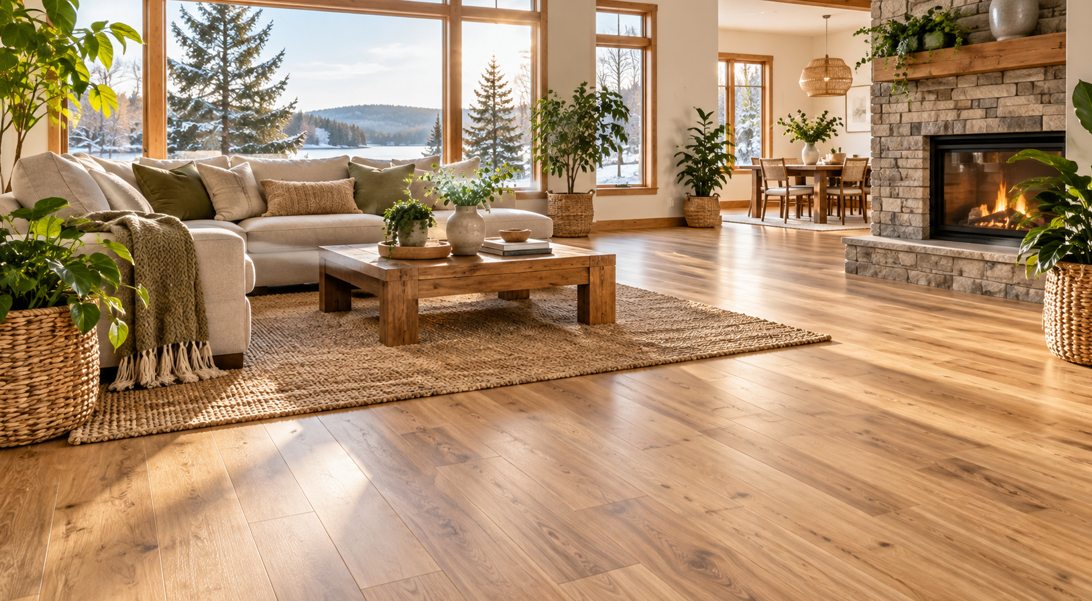
Choosing new flooring is no longer only about color, durability, and price. More Wisconsin homeowners are also thinking about how flooring materials are made, what they contain, how long they last, and whether they can support a more environmentally responsible home.
Laminate flooring has changed significantly over the years. Modern products can combine realistic wood visuals, strong everyday performance, and features that appeal to homeowners who want to make more thoughtful purchasing decisions.
That does not mean every laminate floor is automatically eco-friendly. The environmental impact can vary depending on the materials used, manufacturing practices, certifications, durability, installation method, and how long the flooring stays in service.
For more than 25 years, Carpetland USA Flooring Center has helped homeowners throughout Southeastern Wisconsin compare flooring choices for their homes and lifestyles. For environmentally conscious households in Germantown, Burlington, Kenosha, Racine, Pewaukee, West Allis, Sturtevant, and surrounding communities, understanding what to look for can make choosing laminate much easier.
What Makes Laminate Flooring More Environmentally Responsible?
There is no single feature that makes a laminate floor environmentally friendly.
Instead, homeowners can look at several factors together.
These include:
The type of wood-based materials used in the core
Whether recycled or responsibly sourced content is included
Indoor air quality certifications
Product durability and expected lifespan
Manufacturing practices
Packaging
Installation methods
Maintenance requirements
A flooring product that lasts longer may also reduce the need for frequent replacement, which can help reduce material use over time.
Look Beyond the Surface Design
Laminate flooring is built in layers.
Most products include:
A protective wear layer
A printed decorative layer
A wood-based core
A backing layer
Because of this layered construction, homeowners can evaluate more than the visual finish.
The core material, adhesives, coatings, and manufacturing standards all contribute to the overall environmental profile of the product.
Look for Laminate Made With Recycled Wood Content
One of the most useful features to look for is recycled wood content.
Many laminate flooring cores are made using wood fibers or particles that can come from wood by-products.
Instead of relying entirely on newly harvested timber, some manufacturers incorporate material that might otherwise go unused.
Why Recycled Content Matters
Using recycled or recovered wood materials can help:
Reduce demand for virgin raw materials
Make use of manufacturing by-products
Reduce waste
Support more efficient material use
This does not mean recycled content alone makes a product sustainable.
It is one factor among several.
Homeowners can also look at manufacturing transparency, product certifications, durability, and indoor air quality.
Ask for Product Information
When comparing flooring, it can be helpful to ask whether the manufacturer provides information about:
Recycled content
Wood sourcing
Environmental certifications
Manufacturing standards
Product emissions
Clear manufacturer documentation can make it easier to compare options rather than relying on vague environmental claims.
Choose Products With Recognized Indoor Air Quality Certifications
Indoor air quality is another important part of environmentally conscious flooring selection.
Flooring materials, adhesives, finishes, and other building products can release volatile organic compounds, often shortened to VOCs.
Some products are manufactured to meet stricter emissions standards.
Certifications Can Make Comparison Easier
Homeowners may come across certifications or standards that evaluate emissions from building materials.
These can provide an independent reference point when comparing flooring products.
Rather than assuming a product is low-emitting because of marketing language, look for documented certification from recognized testing programs.
Why This Matters in Wisconsin Homes
During cold Wisconsin winters, homes often stay closed up for long periods.
Windows may remain shut while heating systems run continuously.
Choosing lower-emitting building materials can therefore be particularly appealing to homeowners who are paying closer attention to indoor environmental quality.
This is especially relevant when replacing flooring across large areas of the home, where the total amount of material involved can be significant.
Consider Laminate With Responsibly Sourced Wood Materials
Responsible sourcing is another factor worth considering.
Some manufacturers use wood materials that come from forests managed according to recognized sustainability standards.
This can help homeowners identify products connected to more responsible forestry practices.
What Responsible Forestry Generally Focuses On
Forest management programs may consider factors such as:
Regeneration after harvesting
Protection of wildlife habitats
Responsible land management
Long-term forest health
Traceability of wood products
Homeowners interested in this area can check manufacturer documentation or ask flooring professionals about available products that carry recognized forestry certifications.
Certification Is Better Than Vague Claims
Terms such as "green," "natural," or "eco-friendly" can mean different things depending on the manufacturer.
Specific certifications provide a clearer basis for comparison.
When possible, look for documented standards rather than relying only on packaging language.
Durability Is an Important Part of Sustainability
One of the easiest environmental factors to overlook is lifespan.
Flooring that needs to be replaced frequently uses more materials over time.
A durable laminate that performs well for many years can therefore be a practical part of a more environmentally conscious flooring decision.
Look at Wear Resistance
Laminate flooring is available in different performance levels.
Homeowners can consider how the floor will be used before selecting a product.
For example, a busy family room may need a more durable wear layer than a lightly used guest bedroom.
Choosing a floor that matches the demands of the room can help prevent premature replacement.
Think About Household Lifestyle
Consider:
Children
Pets
Heavy foot traffic
Home offices
Dining areas
Entryways
Furniture movement
A floor that works well with the household's actual lifestyle is more likely to stay attractive for longer.
That can be more sustainable than choosing a product based only on appearance and replacing it early because it was not suited to the room.
Water Resistance Can Help Extend Flooring Life
Wisconsin homes regularly deal with moisture from changing weather.
Snow, slush, rain, mud, and wet footwear can all find their way indoors.
Choosing laminate with improved water resistance can help protect the flooring from everyday exposure.
Areas Where Water Resistance Matters
This can be especially useful around:
Entryways
Mudrooms
Kitchens
Dining areas
Pet feeding zones
Busy family spaces
Water-resistant and waterproof claims can vary between products, so homeowners can compare manufacturer specifications carefully.
Protecting the Floor Reduces Waste
Preventing avoidable moisture damage can help extend the usable life of flooring.
That means fewer damaged planks and less likelihood of replacing large sections earlier than expected.
Simple habits also help.
Promptly wiping up spills, using entry mats, and following approved cleaning methods can support longer floor life without requiring aggressive cleaning products.
Explore Modern Laminate Made for Long-Term Performance
Environmentally conscious flooring decisions are not only about materials.
They are also about choosing a product that fits the home well enough to remain in use.
Modern laminate flooring is available in a wide variety of wood looks, plank sizes, durability levels, and water-resistant constructions, making it easier for homeowners to balance style with long-term practicality.
Realistic Wood Looks Can Reduce the Need for Solid Wood
Laminate can recreate the appearance of species such as:
Oak
Maple
Hickory
Walnut
Other popular hardwood visuals
For homeowners who love the appearance of wood but want an alternative construction, laminate can provide that style without requiring a solid hardwood plank.
Choose a Design With Staying Power
Trend-driven flooring can look exciting at first, but styles that quickly feel dated may encourage earlier replacement.
More timeless options can stay visually appealing for longer.
Consider:
Natural wood tones
Versatile grain patterns
Neutral colors
Finishes that coordinate with multiple interior styles
A floor that still feels attractive years later is more likely to remain in place.
Floating Installation Can Reduce the Need for Adhesives
Many laminate floors use a click-lock installation system.
The planks connect together and float over the subfloor rather than being permanently glued down.
This installation style can offer several practical benefits.
Potential Advantages of Floating Floors
Depending on the product and room, floating installation can:
Reduce the need for flooring adhesive
Make individual planks easier to access
Simplify future removal
Reduce permanent attachment to the subfloor
Not every installation situation is the same, so manufacturer requirements still need to be followed.
Underlayment Matters Too
Some laminate products include attached underlayment, while others require a separate layer.
Underlayment can contribute to:
Sound reduction
Comfort
Moisture management
Flooring performance
Homeowners interested in sustainable materials can also ask about underlayment products with recycled content or environmental certifications.
Choose Maintenance Methods That Use Fewer Harsh Products
Laminate flooring generally does not require waxing, refinishing, or aggressive maintenance treatments.
That can be appealing for homeowners looking for a straightforward cleaning routine.
Everyday Cleaning Can Be Simple
Routine maintenance may include:
Sweeping
Vacuuming with the appropriate floor setting
Dry microfiber cleaning
Light damp cleaning when recommended
Always follow the flooring manufacturer's care instructions.
Using excess water can damage some laminate products, while unsuitable cleaners may leave residue or affect the finish.
Less Is Often Enough
A durable floor does not need to smell strongly of cleaning chemicals to be clean.
Using manufacturer-approved products in appropriate amounts can help maintain the finish while avoiding unnecessary product use.
Entry mats can also reduce the amount of dirt and grit brought indoors, especially during Wisconsin winters.
That means less frequent intensive cleaning and less wear caused by abrasive debris.
Local Climate Can Influence Sustainable Flooring Choices
Environmental responsibility also means choosing flooring that suits where it will actually be installed.
A product that performs well in one climate may face different conditions in another.
Wisconsin homes experience:
Cold winters
Humid summers
Snowmelt
Spring mud
Indoor heating
Seasonal humidity changes
These conditions can influence how flooring performs.
Entryways Need Extra Consideration
Exterior entrances often receive the most moisture, salt, and grit.
Durable, water-resistant laminate combined with quality mats can help protect the floor in these areas.
Basements Need Careful Evaluation
Lower-level rooms can experience different moisture conditions than upper floors.
Before installing laminate, homeowners can evaluate the subfloor and moisture conditions to determine whether a particular product is appropriate.
Busy Homes Need Realistic Durability
A household with children, pets, and frequent visitors may benefit more from a highly durable product than from one selected only for environmental features.
Longevity is part of responsible material use.
Avoid Replacing Flooring Earlier Than Necessary
Environmentally conscious home improvement is not always about buying something new.
Sometimes the more responsible option is extending the life of the flooring already in place.
Minor Damage May Be Repairable
A single scratched or damaged plank does not automatically mean the entire room needs replacement.
Depending on the flooring system, it may be possible to address:
Individual plank damage
Small chips
Limited surface scratches
Minor edge problems
Protect Existing Flooring
Simple habits can help prolong floor life:
Add pads beneath furniture legs
Use mats near exterior doors
Clean grit promptly
Avoid dragging heavy furniture
Wipe up moisture quickly
Follow approved cleaning instructions
Replacing flooring once it genuinely reaches the end of its useful life makes more sense than changing it simply because minor wear appears.
What to Ask When Shopping for Eco-Conscious Laminate
Homeowners do not need to become flooring manufacturing experts.
A few practical questions can make comparing products much easier.
Ask about:
Recycled content
Wood sourcing
Indoor air quality certification
VOC emissions
Water resistance
Wear ratings
Manufacturer warranties
Installation requirements
Expected performance in high-traffic areas
Care requirements
The answers can help separate meaningful environmental features from general marketing claims.
Balance Sustainability With Practicality
The best flooring choice is rarely determined by one feature.
A product with impressive environmental credentials may not be the right option if it cannot handle the room where it is installed.
A balanced decision considers:
Sustainability
Durability
Design
Maintenance
Moisture exposure
Household needs
Long-term value
That combination helps create a floor that homeowners can enjoy rather than replace prematurely.
Make a More Thoughtful Flooring Choice for Your Wisconsin Home
Eco-friendly flooring is not about finding one perfect material.
It is about making better-informed choices.
For laminate flooring, that can mean looking for recycled wood content, responsibly sourced materials, recognized indoor air quality certifications, durable construction, practical water resistance, and products that are designed to remain attractive for years.
Installation and maintenance matter too. A suitable floating installation may reduce adhesive use, while straightforward cleaning routines can limit the need for harsh maintenance products.
Most importantly, homeowners can choose flooring that genuinely fits their household.
A durable floor that performs well in Wisconsin's changing seasons and remains in place for many years can offer meaningful long-term value.
Carpetland USA Flooring Center provides a wide selection of flooring for homeowners across Southeastern Wisconsin, along with knowledgeable guidance to help compare products, features, and styles. For help finding laminate flooring that balances durability, design, and environmentally conscious features, we are here to help.


