

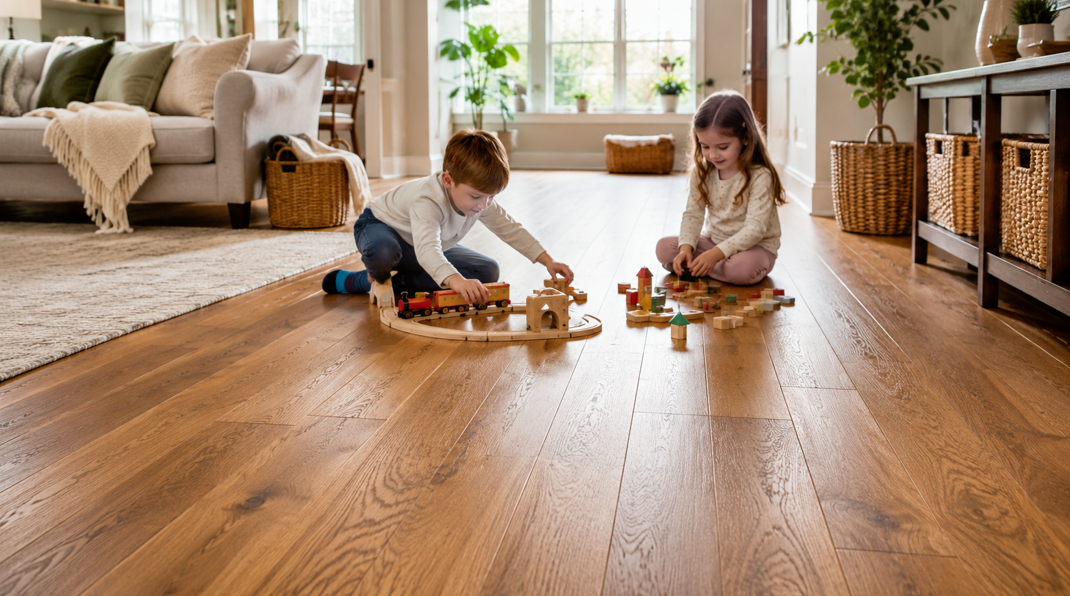
A family floor has to do more than look beautiful on installation day. In a busy home, it may become the backdrop for toy cars, homework, pets racing to the door, and countless trips through the hallway.
That is why families in Pewaukee, Burlington, and nearby Southeastern Wisconsin communities often weigh appearance alongside dent resistance, finish durability, maintenance, and everyday comfort.
Hardwood can work very well in a home with children. The National Wood Flooring Association (NWFA) notes that wood floors can stand up to the wear and tear of kids and pets, while also emphasizing that wood species, finish, care, and protection all influence long-term performance.
At Carpetland USA Flooring Center, families can compare hardwood options with their actual household routines in mind. The goal is not to find a floor that will never show a mark. It is to choose a beautiful, durable floor that fits the way your family lives and can be cared for realistically.
What Makes Hardwood Flooring Child-Friendly?
“Child-friendly” does not describe one specific wood species or product. It is better understood as a combination of characteristics that make a floor practical for an active household.
A Species That Matches Your Activity Level
Different wood species have different levels of hardness. The Janka hardness scale is commonly used to compare how resistant solid wood species are to dents and indentation. Harder species generally resist denting better, although the NWFA points out that the Janka rating is only one part of durability. The cut of the wood and the finish also affect how a floor performs.
A Finish Designed for Everyday Residential Use
The finish is the protective surface that takes much of the day-to-day wear. Children may drag a chair, drop a building block, or run across the room in socks after coming inside.
No hardwood finish makes a floor completely scratch-proof or dent-proof. A quality finish can, however, help the surface handle normal household use and make routine care more manageable.
A Look That Ages Gracefully
Some floors make every tiny mark obvious. Others have enough grain, color variation, or texture to make normal signs of family life less noticeable.
For many households, a lightly textured or naturally varied wood can be easier to live with than a very dark, highly uniform surface.
A Care Routine the Whole Household Can Handle
A family-friendly floor also needs realistic maintenance. Regular sweeping or vacuuming with an appropriate hard-floor attachment helps remove grit, and spills are best addressed promptly according to the flooring manufacturer’s care instructions. NWFA maintenance guidance also recommends floor protectors and suitable rugs as preventive measures.
Best Hardwood Species for Busy Family Homes
There is no single “best” hardwood for every family, but several common domestic species deserve a close look because they balance hardness, appearance, and versatility.
Hickory for High-Activity Areas
Hickory is one of the harder common domestic hardwood species. In the NWFA homeowner guide, hickory/pecan is listed at about 1,820 on the Janka scale.
That can make hickory appealing for homes where the floor sees plenty of activity, including:
Family rooms
Hallways
Play areas
Open-concept living spaces
Homes with children and pets
Hickory also has noticeable grain and color variation. From a practical family perspective, that character can be helpful because minor everyday wear may blend into the natural look more easily than it would on an extremely uniform floor.
Hard Maple for a Cleaner, Brighter Look
Hard maple is another strong choice when dent resistance matters. The NWFA guide places hard maple around 1,450 on the Janka scale, harder than red and white oak.
Its grain is generally finer and less pronounced than oak or hickory, making it a good match for:
Light, modern interiors
Bedrooms
Home offices
Contemporary family rooms
Homes with simple cabinetry and clean lines
One consideration is that a smoother, more uniform surface may show some marks more clearly than a strongly grained species.
White Oak for Balance and Versatility
White oak is an excellent all-around family choice because it combines a useful level of hardness with visible grain and broad design flexibility.
The NWFA lists white oak at approximately 1,360 on the Janka scale.
White oak works well for families who want one hardwood to flow through multiple rooms. It can complement modern, transitional, farmhouse, and traditional interiors depending on the stain, plank width, and finish.
Its grain pattern can also be forgiving in busy living areas, where small signs of daily life are easier to accept when the floor already has natural visual movement.
Red Oak for Warm, Familiar Character
Red oak remains a popular traditional hardwood. At roughly 1,290 on the NWFA Janka scale, it is somewhat softer than white oak but still a practical residential option for many households.
Its pronounced grain and warmer undertones make it appealing in Burlington and Pewaukee homes with classic cabinetry, wood trim, or a more traditional interior.
Choose Hardwood by Room, Not Just by Species
Children use different parts of a home in very different ways. A quiet bedroom floor does not face the same demands as the path between the kitchen and back door.
Looking at the home room by room can lead to a better flooring decision.
Family Rooms and Play Spaces
These are some of the hardest-working spaces in a family home.
Look for a hardwood with enough hardness for the household’s activity level and a finish intended for regular residential traffic. Natural grain and moderate color variation can also help the room feel relaxed rather than precious.
Area rugs can be especially useful beneath play zones. They create a softer surface for sitting and playing while helping protect the hardwood from repeated toy activity.
Hallways and Stairs
Hallways concentrate foot traffic into narrow paths. Children may also move quickly through these areas, especially during busy mornings and after school.
A durable species such as white oak, maple, or hickory may be worth comparing for these high-use zones. Rugs or runners may be appropriate in some areas, but they need secure, flooring-compatible backing so they do not become a slipping concern.
Stairs deserve separate planning because tread construction, nosing, finish, and installation all matter. Discuss the complete stair system with a flooring professional rather than treating stairs as an extension of the room floor.
Bedrooms
Children’s bedrooms typically face less concentrated traffic than hallways and family rooms, which can give parents more flexibility.
If the same hardwood runs from the hallway into bedrooms, it can make an upper level feel larger and more cohesive.
Dining Areas
Dining spaces bring a different challenge: moving chairs.
Fabric-faced furniture glides can help protect hardwood from scuffing and scratching, and NWFA guidance recommends checking floor protectors periodically for embedded grit.
For a family that eats together every day, this simple detail can make a meaningful difference over time.
Finish, Color, and Texture Can Make Family Life Easier
Species gets plenty of attention, but the surface appearance of hardwood can have just as much influence on how easy the floor feels to live with.
Mid-Tone Colors Are Often Forgiving
Very dark floors can make dust, crumbs, light pet hair, and small surface marks more visible. Extremely light floors can show certain spills or darker debris.
A medium natural wood tone can provide a comfortable middle ground for a busy family household.
Grain Can Work in Your Favor
Oak and hickory have more visible grain than maple. That visual movement can make small dents and minor wear less noticeable.
If you want a floor that feels relaxed and natural, grain variation can be an advantage.
Texture Adds Character
Wire-brushed or lightly textured surfaces can create depth and a lived-in appearance. Depending on the product, texture may also make small marks less visually prominent than on a perfectly smooth surface.
When comparing hardwood flooring, look at the complete sample from several feet away as well as up close. A floor covers a large area, so overall color movement and grain can matter more than one small section of a plank.
Simple Ways to Protect Hardwood From Everyday Family Activity
A child-friendly hardwood floor does not need a complicated care routine. A few consistent habits can protect the finish while letting the home function normally.
Use Rugs at the Right Places
NWFA guidance recommends breathable rugs at entrances to help reduce grit, salt, sand, moisture, and other debris being tracked onto wood floors. It also advises caution with certain non-skid rug pads because some materials can affect the finish.
For Wisconsin families, useful rug locations include:
Inside exterior doors
Near mudroom entrances
Beneath active play areas
In high-traffic transition spaces
During snowy months in Pewaukee and Burlington, keeping salt, grit, and wet footwear away from hardwood is particularly helpful.
Add Protectors Beneath Furniture
Place suitable furniture glides beneath chairs, tables, toy storage units, and other furniture that may move.
Check them occasionally. A felt pad with grit embedded in it can stop protecting the floor effectively.
Keep Grit Under Control
Small particles of sand and dirt can act like abrasives under shoes and furniture.
Regular sweeping, dusting, or vacuuming with the beater bar turned off helps remove these particles. NWFA consumer guidance recommends these methods and advises against excessive water and steam on wood flooring.
Deal With Spills Promptly
Juice cups tip over. Art projects escape the table. Wet mittens get dropped in the wrong place.
Family life happens.
Instead of worrying about every accident, have a simple plan: address spills promptly and use the cleaning products and methods recommended for the specific hardwood and finish.
Carpetland’s own hardwood care guidance similarly recommends prompt spill cleanup and regular removal of dirt and grit.
What About Scratches, Dents, and Dropped Toys?
One of the biggest concerns parents have about hardwood is whether normal family activity will ruin it.
The better expectation is that any real wood floor may develop signs of use over time.
Hardness Helps With Dents
A harder species can provide more resistance to indentation from dropped objects and concentrated pressure. That is where the Janka scale becomes useful.
But it is not a promise that a toy, furniture leg, or heavy object cannot leave a mark.
Finish Helps With Surface Wear
Many everyday scratches affect the finish rather than penetrating deeply into the wood itself. NWFA guidance notes that some finish-level scratches can be addressed through professional maintenance, while deeper damage may require more extensive repair or refinishing.
One of hardwood’s long-term advantages is that appropriate wood floors can often be maintained, repaired, or refinished rather than automatically being replaced when wear appears.
Prevention Can Still Feel Relaxed
A family home does not need to become a no-play zone.
Practical habits are enough:
Put rugs beneath the busiest play areas.
Use furniture protectors.
Avoid dragging heavy furniture.
Keep pet claws trimmed.
Take off cleats or hard outdoor footwear inside.
Clean grit before it gets ground into the finish.
The NWFA recommends these same types of preventive measures for protecting wood floors.
Solid or Engineered Hardwood for a Family Home?
Families may also need to choose between solid and engineered hardwood.
Both can be real wood flooring. The NWFA defines solid wood flooring as one piece of wood from top to bottom, while engineered wood flooring is constructed from layers of real wood, generally arranged in opposing directions.
Solid Hardwood
Solid hardwood has a long history in residential homes and can be an excellent choice in suitable above-grade spaces.
Its exact installation requirements depend on the product, subfloor, and room conditions.
Engineered Hardwood
Engineered hardwood can offer greater dimensional stability because of its layered construction. That may make it worth considering where the installation conditions, plank width, or household preferences point toward an engineered product. NWFA installation guidance notes the dimensional-stability advantages of engineered construction while emphasizing that product and site conditions still matter.
Neither construction is universally more “child-friendly.” The better choice is the one that fits the room, subfloor, manufacturer requirements, design, and family lifestyle.
Plan for Wisconsin Weather at the Door
Children do not stop at the entry to shake every grain of winter sand from their boots. That makes Wisconsin weather part of the flooring conversation.
Snow, road salt, grit, wet shoes, and muddy spring conditions can all reach entry areas.
A simple family routine can help:
Place effective mats at entrances.
Create a designated spot for wet boots.
Keep towels nearby for tracked-in moisture.
Sweep gritty entry areas regularly.
Address puddles and spills promptly.
NWFA maintenance guidance specifically recommends breathable rugs at doorways to reduce tracked-in grit, salt, chemicals, sand, moisture, and debris.
This is also a good reason to think carefully about where hardwood begins. Some families may choose a different flooring material in a heavily exposed mudroom while continuing hardwood through adjacent living areas. The right layout depends on the home.
Build a Hardwood Floor Around Your Family, Not a Showroom Sample
The most child-friendly hardwood is not automatically the hardest species or the darkest finish.
It is the floor that balances durability, style, maintenance, and the way your household actually uses each room.
Hickory can be appealing for families who prioritize hardness and natural character. Maple brings a cleaner appearance with strong dent resistance. White oak offers an excellent balance of durability, visible grain, and design versatility. Red oak provides familiar warmth and can be a natural fit in more traditional Wisconsin homes.
Then look beyond species.
Ask:
Where do the children play most often?
Which hallway gets the heaviest traffic?
Are pets part of the household?
Which entrances collect snow and grit?
Do you prefer a smooth or textured surface?
Would visible grain help the floor feel more relaxed?
Is solid or engineered construction better suited to the room?
What care routine feels realistic for your family?
Carpetland USA Flooring Center has showroom locations in both Pewaukee and Burlington, giving local families an opportunity to compare hardwood colors, grains, constructions, and finishes in person.
You do not have to choose between a beautiful home and a home where children can actually be children. With the right species, finish, installation, and care habits, hardwood can become part of family life rather than something everyone feels they need to tiptoe around.
If you are planning new hardwood for your Pewaukee or Burlington home, get in touch with Carpetland USA Flooring Center for help comparing options that fit your rooms, design preferences, and everyday family routine.


